Self-Hypnosis Guide
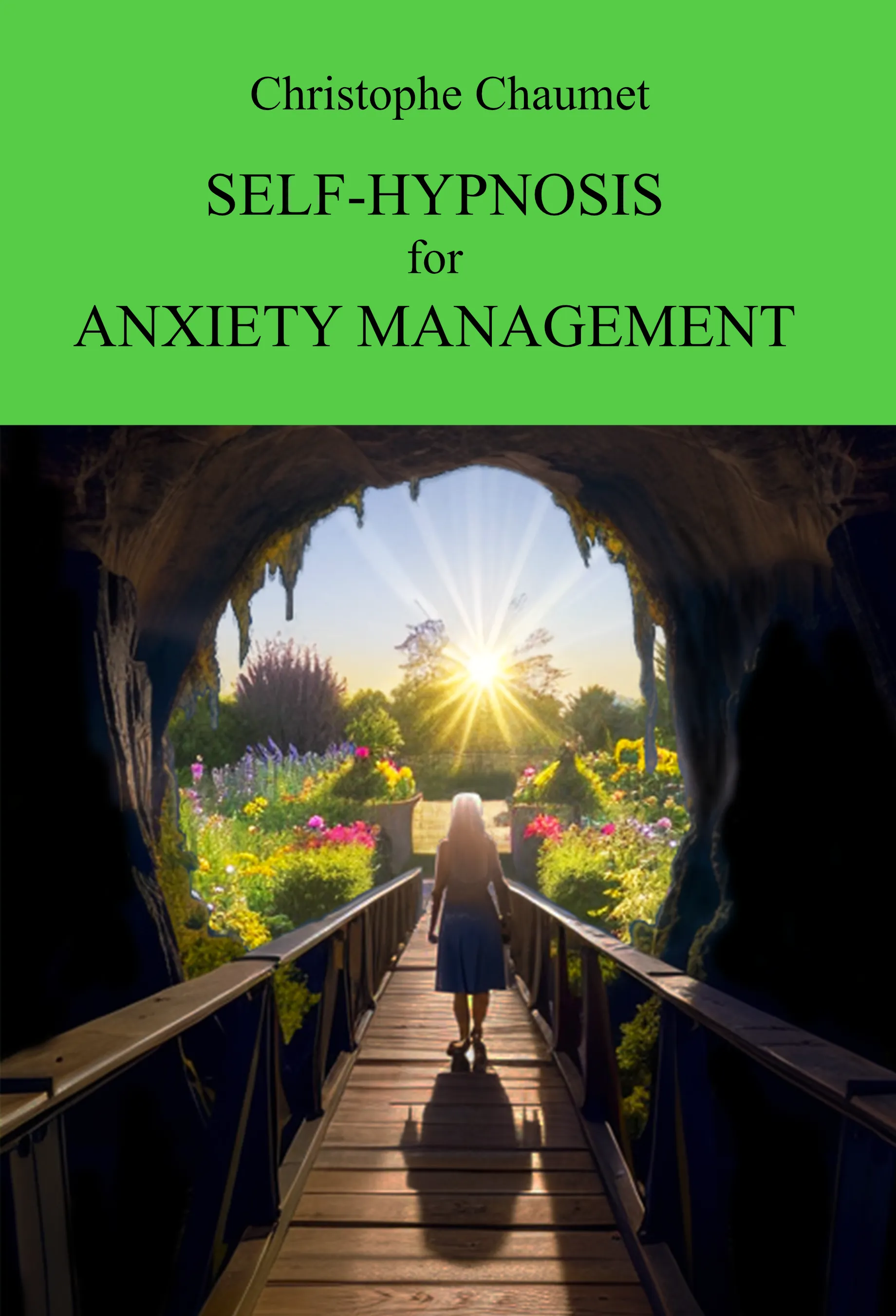
Self-Hypnosis for Anxiety Management
« Calm anxiety from within — without willpower. »
Learn to calm anxiety from within, at your own pace.
Published in
The challenge
Anxiety sustains a vicious cycle: thoughts race, the body goes on alert, and reason can no longer regain control. The harder you fight anxiety, the more it takes hold. Classic relaxation techniques help on the surface, but do not address the central mechanism.
What this book offers
Self-hypnosis breaks this cycle at its source. These techniques — inductions, visualisations, suggestions — can be learned and practised alone, in just a few minutes, wherever you are. With regular practice, the anxiety response gradually recalibrates.
Contents
- 1 Anxiety: mechanisms and manifestations
- 2 The role of the unconscious in stress
- 3 Entering self-hypnosis
- 4 Calming the thoughts
- 5 The safety bubble
- 6 Anchoring and coherence techniques
- 7 Managing crises in real time
- 8 Regular practice to prevent anxiety
Is this book for you?
- You suffer from chronic anxiety or work-related stress
- You ruminate and struggle to "switch off"
- You experience physical symptoms: tension, palpitations, insomnia
- Anxiolytics do not suit you, or you wish to stop taking them
- You are going through a period of overwork or burnout
Frequently asked questions
- Is self-hypnosis effective for chronic anxiety?
- Yes. Chronic anxiety operates as a self-reinforcing loop that willpower alone cannot break. Self-hypnosis interrupts this cycle at its source: it acts on the autonomic nervous system, recalibrates the stress response, and gradually installs new emotional patterns.
- Can self-hypnosis be used during a panic attack?
- Yes. Several short techniques in this guide — rapid anchoring, hypnotic breathing, the "safety bubble" — are designed for real-time use, even during a crisis. They allow you to regain control within minutes, without any preparation.
- How many minutes a day do I need to practise?
- Ten to fifteen minutes daily is enough, ideally at a consistent time. Regularity matters far more than duration. After a few weeks, many practitioners integrate 2–3 minute micro-techniques into their daily routine.
- Is self-hypnosis compatible with an ongoing therapy?
- Yes, and often in a complementary way. Self-hypnosis addresses physiological manifestations and unconscious automatisms, while therapy works on cognitive and relational patterns. The two approaches reinforce each other.
Self-Hypnosis for Anxiety Management
Learn to calm anxiety from within, at your own pace.